








In the first 100 days of a new administration, the President outlines his agenda and mobilizes the government to work toward his goals and objectives. It is a unique moment in every President’s term, a time to set out an actionable agenda for the rest of his term.
At this critical juncture, the electric power sector of the economy requires decisive leadership. Its heavy reliance on fossil fuels and nuclear power makes our current system unaffordable and exacts an unacceptable toll on public health and the environment. The costs of new and existing coal-fired and nuclear power plants are skyrocketing. Our electric generation mix and its attendant fuel cycles are increasing water scarcity and diminishing water quality across the country. The power sector’s voluminous greenhouse gas emissions at every stage of the fuel cycle, from mining and drilling to combustion, contribute substantially to climate change.
However, the ubiquitous and severe negative effects of our electric generation mix can, by and large, be avoided. Americans want2 and deserve a more precautionary energy path that protects their communities’ health and safety, conserves and protects their water resources and is affordable and reliable. Americans deserve a true Clean Energy Agenda.
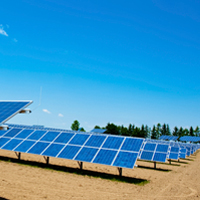
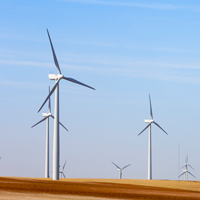
American ingenuity has already provided the opportunity to begin a new American industrial revolution driven by smart, sustainable energy technologies. Solar photovoltaic and wind technology have already become or will soon be competitive with conventional power plants. Better batteries and other storage technologies are on the verge of commercialization. Energy efficiency technologies, ever present but often ignored, are available, inexpensive and easy to adopt. Energy conservation is tried and true and assuming an ever greater role in keeping the lights on. We are on the cusp of a technological revolution and should take full advantage of it.
The next President must seize this potent opportunity to tackle the issues important to Americans: affordability, public health, water availability and quality, environmental quality and climate change. Failure to begin this necessary transition with urgency will severely weaken our economy and perpetuate degradation of our health and exhaustion of our resources.
We call on the next President to rise to the challenge and adopt the policies and programs necessary to advance a true, sustainable, Clean Energy Agenda.
There is overwhelming evidence that a sustainable electric grid is achievable. Most recently, the National Renewable Energy Lab projected that current renewable technologies could supply 80 percent of the grid’s power needs by 2050 at reasonable cost. In all cases, reliability would be sustained. The mix of energy resources in this study included energy efficiency, wind and solar, hydro, biomass and storage technologies. Although the mix of power sources may not be optimal (such as the inclusion of utility-scale biomass), NREL did not, for the most part, include any technologies not already commercialized. Similarly, Professor Mark Jacobson (Stanford University) and Research Scientist Mark Delucchi (Univeristy of California, Davis) described in 2009 how wind, water and solar technologies could replace fossil fuels globally by 2030 at a cost less than projected for business as usual at the time.3 A concerted national effort to bring more storage, highly efficient solar PV and offshore wind technologies to commercialization would change the game entirely and further ease the process of replacing fossil fuel and nuclear resources.
The electric generation mix must be based on technologies/measures that:
To meet the sustainability criteria, the next administration should focus its efforts and public resources on energy efficiency,4 energy conservation, renewables (particularly wind and solar technology),5 distributed power (power generation at homes or businesses), and electric storage and grid technologies sufficient to achieve 50-60 percent renewable energy penetration on the electric grid nationwide by 2030, and 100 percent penetration by 2050. These resources are the least water-intensive, least polluting and most affordable (when all societal costs are taken into account) that can effectively address climate change and maintain grid reliability.
Whether for domestic or foreign use, mining and drilling activities have severe impacts on local populations and water and other resources. The next President should propose policies to prevent the export of fossil fuels and uranium to other countries so as to:
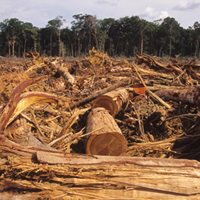
The next administration must acknowledge that not all renewable power is created equal. Utility-scale biomass-fired power plants (large, low-efficiency facilities operated solely for electricity generation) have the same problems as any combustion technology. Air emissions can be severe to toxic, depending on the fuel. A single wood-fired facility requires hundreds of thousands of tons of fuel per year, the equivalent wood as yielded by clear-cutting thousands of acres of forest. Cooling water demands can stress local resources and require taxpayer-funded upgrades of water and wastewater treatment infrastructure. Finally, utility-scale biomass-fired power plants are not carbon neutral and should not be considered a renewable source of power. Construction of new plants should be halted and those in existence phased out because they do not meet the sustainability criteria outlined in this document.6
The new Administration must adopt a public investment approach to energy policy, moving away from subsidies and putting taxpayer funds to work in ways that produce returns that accrue to the public’s benefit. Public investment in emerging energy technologies is essential.7 The private sector simply will not take the risks without government assistance.
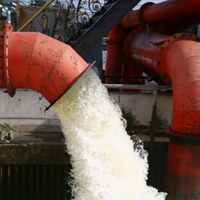
Establishing a national water policy should be a high and urgent priority in the first 100 days. The nation’s essential and irreplaceable supply of groundwater is under threat, and current withdrawal rates are unsustainable. Coal, nuclear and natural gas plants account for almost 50 percent of daily withdrawals.8 Competition for the available water is intensifying and will get worse, according to both the Department of Defense and the Energy Department’s Sandia National Laboratories. Global warming adds to the pressure. Yet the United States has no national water policy. The new administration must make developing one a top priority.
Accordingly, early in his term the new President should issue an executive order directing the Energy and Interior Departments and Environmental Protection Agency to produce a comprehensive water/energy report that would include:
This report should be publicly available and meet a tight deadline.
In addition, the President should also order the two agencies to:
In conjunction with the water study, the President should issue an executive order to have the Office of Science and Technology Policy coordinate assessments of the full social, environmental, economic and health costs of every electric energy resource. The order should require appropriate agencies to identify information gaps and commission research to fill them, including the costs of water withdrawals and consumption. It should set a deadline of one year.
This study should be used to create a baseline of data to inform policymakers about the true costs of our current and future energy choices.
Within current budgetary constraints, the administration should set parameters for U.S. energy policy and direct all executive agencies to adhere to them.
The Departments of Energy and, more recently, Defense, are the key agencies in energy R&D, demonstration and commercialization. The Energy Department oversees research laboratories (e.g. the National Renewable Energy Lab) and the Advanced Research Projects Agency – Energy, which provides funding in conjunction with the private sector to assist in commercializing targeted technologies.9 The Department of Energy awarded $43 million in R&D funds to further develop offshore wind technology and reduce market barriers for deployment in 2011. ARPA-E awarded $14.7 million in grants in 2011 to reduce the cost of utility-scale PV systems by 50% and residential systems by 80% by enhancing the efficiency of the panels. ARPA-E recently awarded $43 million for grid-scale battery storage and vehicle batteries designed to bring down the cost and enhance the longevity of these systems.
The Defense Department is heavily invested in efficiency, renewables, distributed power, micro- grids and water conservation. It has become a technology agency dedicated to testing and validating emerging technologies for commercialization and deployment at home and abroad. It also considers climate change a national security threat of utmost importance.
In every important electric power technology area, the President should move aggressively to promote the speedy development and deployment of sustainable, renewable resources. Specifically, the President should establish bold clean energy goals along the following lines:
Energy Efficiency/Energy Conservation and Renewables
Distributed Power Technology
Storage Technology
Microgrid Development
The President should accelerate the phase-out of fossil fuel, nuclear power and utility-scale biomass plants, by establishing clear and ambitious timelines for the following measures:
Coal-Fired Power
Nuclear Power
Natural Gas and Oil
Biomass
The Federal Energy Regulatory Commission has jurisdiction over interstate transmission lines and wholesale electricity rates (power that is sold between utilities or to utilities by independent, non-utility power plant operators). Accordingly, the next President should:
Thanks to the innovative capacities of the public and private sectors, we have the technology and research capacity to provide for our energy needs while protecting public health and safety. The transition to a clean energy future will not be achieved, however, without the political will, vision and determination of a new generation of leaders willing to stand up to powerful economic interests invested in business as usual. A President who leads the country toward a new energy economy will have the support and gratitude of the American people.
2. The Civil Society Institute has conducted 28 surveys the last six years asking Americans about their attitudes towards energy policy. The majority of Americans support a shift in energy policy to a sustainable future. http://www.civilsocietyinstitute.org
3. See “Renewable Energy Futures.” http://www.nrel.gov/analysis/re_futures/ and Mark Jobcobson, Mark Delucchi, “A Path to Sustainable Energy.” Scientific American, November 2009. http://www.stanford.edu/group/efmh/jacobson/Articles/I/sad1109Jaco5p.indd.pdf
4. Energy efficiency should be used as the bridge to achieving renewable energy goals. It provides more short-term jobs and stimulates the US manufacturing base. Over the last 40 years, efficiency measures have saved the US economy multiple hundreds of billions of dollars a year, but far more is possible. Increased efficiency it is also a key component of efforts to shift to renewable energy sources, since less demand means fewer generating units.
5. The technologies the administration should focus on are: building and appliance efficiency, offshore and onshore wind, solar PV, geothermal, electric storage, micro-grid and smart grid , distributed generation, combined heat and power and hydro (wave and distributed hydro).
6. See “Clear Cut Disaster.” http://www.ascension-publishing.com/BIZ/EWG-clearcut.pdf
7. For a history of government investment in new technologies see “Where Good Technologies Come From: Case Studies in American Innovation.” Breakthrough Institute, December 2010. http://thebreakthrough.org/blog/Case%20Studies%20in%20American%20Innovation%20report.pdf
8. See “Hidden Costs.”
9. See http://bipartisanpolicy.org/sites/default/files/AEIC%20Report.pdf. The American Clean Energy Agenda does not envision continued federal support for nuclear power. Despite decades of subsidies, the costs of nuclear power continue to rise and cost overruns during construction continue to be the norm. The precise financial and budgetary implications of phasing out conventional fossil fuel and nuclear power and phasing in clean, safe energy sources need to be calculated and are beyond the scope of this initial paper. However, these calculations should become an integral part of the process of preparing the Federal Budget to demonstrate a methodical move toward a truly clean energy agenda.
